Fast Shipping Available
Fast Shipping Available

Professional mechanics face a reality that generic hardware store tools simply cannot address: modern engines are engineered with precision tolerances that demand equally precise extraction solutions. When a manifold bolt seizes inside an aluminum head or a fuel injector refuses to budge, standard pliers and hammers become liabilities rather than assets. We design our automotive specialty tools specifically for these moments, recognizing that downtime costs money and frustrated customers create reputation problems.
This guide walks you through the landscape of professional-grade solutions and explains how purpose-built tools transform job profitability from a source of stress into a competitive advantage.
You've likely experienced the frustration of reaching for a tool that wasn't quite right for the job. Generic extraction tools force compromises: they might damage surrounding components, require excessive force that risks injury, or simply fail to grip the target fastener securely enough to apply the controlled leverage needed for extraction.
Specialized automotive tools address this gap by engineering solutions around the specific physics and geometry of engine repair challenges. When we develop a broken bolt extraction kit, we're not making a one-size-fits-all product. We're solving for the exact bolt configuration, material properties, and spatial constraints that exist inside a Ford Power Stroke or GM Duramax engine.
The financial case is straightforward. A $300-500 specialty tool kit can save 4-8 hours of labor per job while eliminating the risk of catastrophic damage that turns a $2,000 repair into a $10,000 engine replacement. For a shop billing at $100-150 per hour, that math justifies the investment immediately. Beyond cost recovery, your reputation improves because you deliver faster turnarounds and cleaner results that customers can actually see.
Professional technicians also recognize that quality tools signal competence. When a customer sees your shop equipped with purpose-built extraction systems rather than improvised workarounds, they feel confidence in your ability to handle their vehicle's needs. That confidence translates to repeat business and referrals.
Three scenarios appear constantly in professional repair shops, and they're precisely where standard tools collapse.
Broken manifold bolts represent the first category. Exhaust manifolds bolt directly into engine heads using studs or threaded holes. Thermal cycling causes expansion and contraction, and corrosion welds these fasteners in place. When you need to remove the manifold and the bolt head rounds off or snaps below the surface, you're left with a shaft of metal stuck inside a blind hole with minimal clearance. A standard drill can't apply the angle of attack needed to center-drill without wandering. Impact drivers lack the precision geometry to grip a partially damaged fastener. Our broken bolt extraction systems use tapered pilots and hardened bits specifically engineered for this scenario.
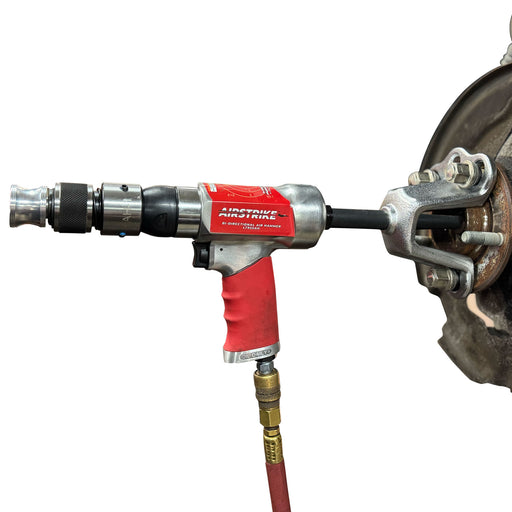
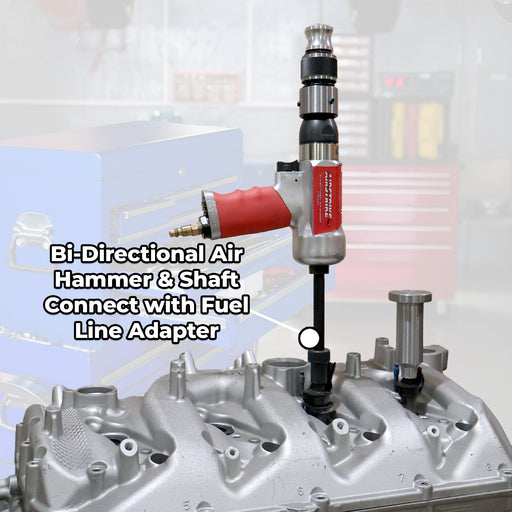
Seized fuel injectors form the second challenge. Fuel injectors sit in deep bores and are often seized by carbon buildup, corrosion, or differential thermal expansion between the injector body and its surrounding cavity. Grabbing the injector with standard pliers risks crushing the thin walls. Brute force hammering can break the internal components. Extractors that lack the right mechanical advantage either strip the grooves meant to accept the removal tool or slip off entirely. This is where air hammer powered removal tools excel, applying rapid controlled impulses that gradually break corrosion bonds without shock loads that would damage precision components.
Wheel bearing hub extraction represents the third major category. Modern vehicles use pressed wheel bearing hubs that sit inside steering knuckles or brake assemblies. Getting them out requires distributing force evenly across the bearing race while pulling straight and parallel. Makeshift approaches using multiple jackscrews or improper puller geometry can crack the knuckle casting, turning a $500 repair into a $3,500 part replacement. Purpose-built hub pullers distribute load correctly and maintain alignment throughout extraction.
Standard tools fail at these tasks because they prioritize general-purpose capability over the specific geometry and force requirements of these extractions. Specialty solutions succeed by trading breadth for depth.
We've engineered our broken bolt extraction kits around a fundamental principle: remove the broken fastener without enlarging the original hole. Enlarging the hole requires retapping, installing a helicoil, or drilling an oversize fastener hole and re-machining. Any of these paths adds hours to a job and introduces risk if you damage surrounding threads or penetrate into an oil gallery.

Our systems use tapered pilot bits that self-center within the broken bolt shaft. The taper geometry creates contact points that resist walking, allowing you to establish a centered guide hole even when the bolt is severely damaged or partially exposed. Once the pilot is established, progressive larger bits follow, creating a precise hole that accepts an extraction screw or extractor bit. The screw threads into the hole and as you tighten it, the mechanical advantage pulls the broken shaft straight out.
Here's a concrete example: an engine with a broken exhaust manifold stud inside the head. The bolt head broke off flush with the surface during removal. A standard approach might take 3-4 hours of careful hand-drilling, checking alignment constantly, and risking breakthrough into water jackets. Our kit reduces this to 45 minutes because the tapered pilot geometry does the centering work for you and the hardened bits cut efficiently through the broken stud material.
The cost advantage extends beyond labor savings. Without proper extraction tools, shops often resort to destructive removal: drilling the bolt out completely and retapping the hole. This adds machine shop costs and repair time. With our specialized kits, you extract the broken portion cleanly and reinstall the original size fastener, restoring the joint to specification immediately.
We also engineer our kits to include the specific fastener sizes for each application. The Ford 6.7L broken bolt kit includes pilots and bits sized specifically for the 10mm and 8mm studs that commonly break in EGR and fuel injector mounting points. This removes guesswork and ensures you have exactly what you need on the first attempt rather than waiting for special orders.
Air hammer powered extraction represents a different extraction philosophy than drilling and screwing. Instead of static pulling force, pneumatic hammers deliver rapid impulses that gradually break corrosion bonds without shock loads that shatter components.
This approach works exceptionally well for fuel injectors because it addresses the root cause of seizing: microscopic corrosion accumulation that bonds the injector body to its bore. Sudden yanking creates stress concentration at material boundaries and can crack the injector tip or fuel connector body. Repeated smaller impacts gradually separate the corrosion layer without exceeding the material yield strength of precision-engineered components.
The mechanical advantage of our fuel injector puller design matters equally. The tool seats itself in grooves or design features on the injector body, distributing impact force across a wider footprint rather than concentrating it at a single point. Improper grabbing concentrates force on the fuel connector body, which is not designed to handle extraction loads. Our air hammer tools seat themselves correctly by design, making it impossible to grab wrong.
Performance comparison is telling. Mechanics report that manual extraction of a stubborn fuel injector often requires 20-30 minutes of careful work, risking damage throughout. Our air hammer powered system typically extracts the same injector in 3-5 minutes with zero risk of damage to the injector, fuel rail, or surrounding components. That 15-minute time savings per injector adds up quickly on a job involving multiple cylinders.
The pneumatic approach also works better on seized components that won't move with static force. Once corrosion bonds break and the injector starts to move, continued air hammer pulsing prevents re-seizing and carries the extraction through to completion. With manual tools, you're fighting constant resistance that increases as friction builds. Pneumatic impulses stay ahead of this dynamic resistance.
Wheel bearing hub extraction sits at the intersection of mechanical force and precision alignment. Too much force in the wrong direction cracks the steering knuckle casting. Too little force leaves you fighting indefinitely. Misalignment during extraction can bind the bearing race permanently.
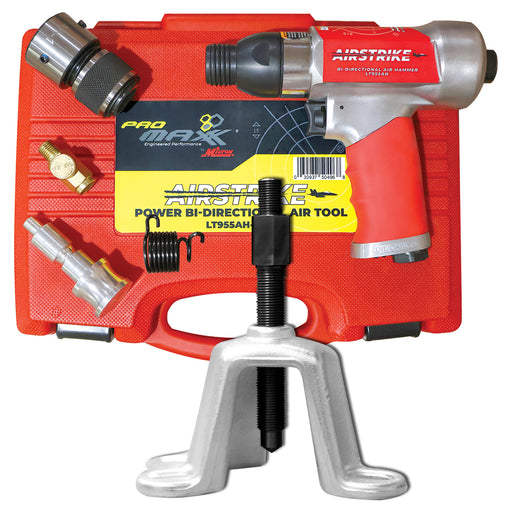
Our Air Hammer hub puller systems solve this through thoughtful geometry that makes correct operation nearly inevitable. The puller frame uses hardened steel arms that maintain perpendicular alignment to the steering knuckle bore. Hydraulic or mechanical screws distribute force evenly across the bearing race diameter, preventing point loading that concentrates stress at single bearing balls or race sections.
The mechanical advantage built into our hub puller designs means you're pulling steadily with manageable force rather than cranking desperately against binding resistance. Most professionals report needing only 10-15 minutes for extraction that might have consumed an hour of struggle with improper pullers or impact approaches.
Hub pullers aren't one-size-fits-all because different vehicles use different knuckle geometries and bearing bore sizes. Our systems account for this through modular designs that accept different arm sets and adapters for specific vehicle platforms. A kit that works on Ford truck knuckles may not function properly on GM truck knuckles because the bolt hole spacing differs. Rather than forcing compromises, our vehicle-specific hub puller configurations ensure proper fit and geometry.
Another critical advantage: proper hub pullers eliminate the temptation to use impacts or destructive methods. Once you have the right tool that works efficiently, you use it. Shops without proper equipment often resort to methods like heating the knuckle, driving hubs out sideways, or other approaches that risk component damage. A $400 hub puller prevents these shortcuts and the costly mistakes they sometimes create.
Drill bits might seem like commodity items, but the quality difference between standard hardware store bits and precision automotive bits becomes obvious when you're drilling a broken fastener inside a precision engine bore.
Standard twist bits walk. When you're drilling into a hard material like a broken steel bolt, the bit can deflect slightly before establishing the groove that keeps it centered. That initial wandering can misalign your extraction pilot hole, forcing you to start over or make do with off-center guidance that causes extraction failure. Precision bits use different flute geometry and point angles engineered to resist walking even when drilling into hard materials at angles that increase deflection risk.
We manufacture our Gold and Platinum series bits with hardened tool steel that maintains edge sharpness longer than standard construction. When you're drilling multiple broken bolts in a single repair job, your bit is cutting fresh material with each hole. A dull bit generates excessive friction that heats the material and accelerates bit wear. Our bits stay sharper longer, meaning cleaner cuts, faster drilling, and consistent pilot hole quality.
The metallurgy matters too. Broken bolts are typically hardened steel designed to withstand high stress. A bit that works fine in soft aluminum or mild steel may dull rapidly or even chip when drilling hardened fasteners. Our premium bits use cobalt-enriched tool steel formulations that maintain hardness at the cutting temperature that develops when drilling through hard materials. This isn't a small advantage: it's the difference between drilling 5 holes with the same bit or needing to swap bits halfway through.
Precision bits also support faster spindle speeds and better cutting efficiency. Mechanics report reducing drilling time 30-40% when moving from standard bits to our precision formulations. That speed improvement means less opportunity for bit walk, better surface finish in the hole, and reduced heat generation that could damage surrounding material.
Different vehicle platforms have different breaking patterns. Ford Power Stroke diesel engines experience specific manifold bolt failures at predictable locations. GM Duramax engines have their own weak points. Light-duty gasoline platforms break fasteners in different places than heavy-duty diesel applications. Rather than building generic kits and hoping they cover most cases, we engineer application-specific solutions.
Our Ford-specific kits include the exact fastener sizes, extraction bit diameters, and pilot guidance dimensions needed for the 10mm and 8mm studs that consistently fail in EGR tube and fuel injector mounting applications on 6.7L Power Stroke engines. The kit includes multiple extractions tools so you can handle both stud sizes without adapting or improvising. When a Ford truck rolls into your bay with a known manifold stud problem, you open the kit and have exactly what you need.
GM kits address the different bolt patterns and stud sizes used in Duramax platforms. While the principle is identical, the specific dimensions differ. Providing the right kit saves your technicians from hunting through assorted tools to find something close enough and hoping it works. It also eliminates the frustration of having the right tool in your shop but not with you on a mobile call.
Diesel platform differences matter substantially. Heavy-duty diesel engines operate at higher loads and temperatures, which changes fastener behavior and the probability of certain failure modes. Diesel-specific kits account for these factors with hardened bits rated for the higher tensile strength materials and larger fastener sizes common in diesel applications.
Having the right kit on hand also supports flat-rate or ticket-time profitability. If you're quoting labor for a broken manifold stud extraction, the time estimate changes dramatically if you have proper tools versus if you're improvising. Proper tools reduce job time 50-75% compared to improvised approaches, which translates directly to profit margin on that ticket.
Downtime cost is a constant pressure in professional repair shops. When a tool breaks, wears out, or you discover you don't have exactly what you need to complete a job, every hour of delay compounds the financial impact. We offer same-day shipping for emergency orders because we understand this reality.
A scenario: it's Tuesday afternoon and you discover the fuel injector puller bit in your kit is damaged. The customer needs the truck ready by Wednesday morning. Next-day delivery from traditional retailers doesn't work. Same-day shipping from us means the replacement bit arrives that evening, allowing you to complete the job on schedule and keep your customer satisfied.
Same-day shipping also supports scenario planning. Rather than maintaining redundant inventory of every specialty tool combination, smart shops order what they need for upcoming jobs with same-day or next-day delivery as backup. This reduces storage space required and capital tied up in inventory while maintaining availability when it matters.
The logistics matter less than the outcome: you maintain schedule integrity and avoid customer frustration. From a business standpoint, a $50 shipping charge costs far less than the customer dissatisfaction and potential lost business from a missed commitment.
The differences between quality specialty tools and generic alternatives show up in failure rates, job duration, and component damage frequency.
Generic extraction tools often compromise on material quality to achieve lower price points. A generic broken bolt extractor might use tool steel that doesn't quite reach the hardness needed for efficient drilling through hardened fasteners. The result: slower cutting, more bit wear, higher chip-off risk, and longer job duration. The cost savings from a $50 generic bit evaporate when the job takes 2 extra hours versus 30 minutes with proper tooling.
Engineering precision matters equally. A generic hub puller might use looser tolerances in the mechanical advantage systems, requiring more force and putting higher stress on both the tool and the components being extracted. This creates a feedback loop where higher stress increases the likelihood of extraction failure or component damage. Purpose-built tools use tighter tolerances and thoughtfully distributed load paths that reduce stress and increase success rates.
Material selection also differs substantially. Generic tools often use common tool steel grades that perform adequately in typical applications but don't excel in demanding scenarios like broken bolt extraction. Our precision bits use cobalt-enriched formulations that maintain hardness and sharpness even when drilling through hardened steel. This isn't marketing: it's measurable material science that produces faster cutting and longer bit life.
Vehicle-specific design is where the performance gap widens most visibly. A generic broken bolt kit that attempts to cover Ford, GM, and Dodge trucks will include compromise fastener sizes and bit diameters that fit none of these platforms perfectly. You're using tools that are close enough to maybe work, rather than tools designed specifically for the fasteners you're extracting. That guesswork introduces risk and consumes time that precise, application-specific tools eliminate.
Professional shops rarely acquire their complete tool inventory at once. Instead, they build strategically over time, starting with the solutions that address their most frequent repair scenarios.
Begin with the application-specific kits that match your primary customer base. If you work primarily with Ford trucks, a Ford broken bolt kit and Ford-specific fuel injector removal tools address the majority of your extraction needs. This concentrated investment delivers immediate ROI through faster job completion and reduced damage risk.
Add pneumatic extraction tools next. An air hammer powered fuel injector puller and hub puller system dramatically improve job speed and success rates for these two common extractions. Most shops find these tools pay for themselves within 3-4 applications.
Expand next to specialty drill bits and secondary extraction systems. Once you have the core tools working, you'll identify specific fastener sizes or scenarios where additional precision tooling helps. Our modular designs support this incremental building approach because each tool addition integrates seamlessly with existing tools.
Consider vehicle-specific tooling based on your service area and customer mix. A shop in diesel country where heavy-duty trucks represent 60% of business benefits from diesel-specific kits. A shop in suburban areas handling primarily light-duty vehicles might prioritize gasoline platform kits instead. Matching your tool inventory to your actual customer base maximizes return on investment.
Documentation and training complete the picture. When you acquire specialty tools, ensure your entire technical team understands proper use and safety requirements. These tools are precision instruments that deliver impressive results when used correctly and create risk when misused. Investment in training pays dividends through consistent execution and damage avoidance.
Start where your pain points are greatest, add tools that address your most common scenarios, and build systematically toward comprehensive capability. Professional shops that follow this progression typically find themselves with precisely the tools they need most frequently while maintaining flexibility to add capabilities as their customer mix evolves.
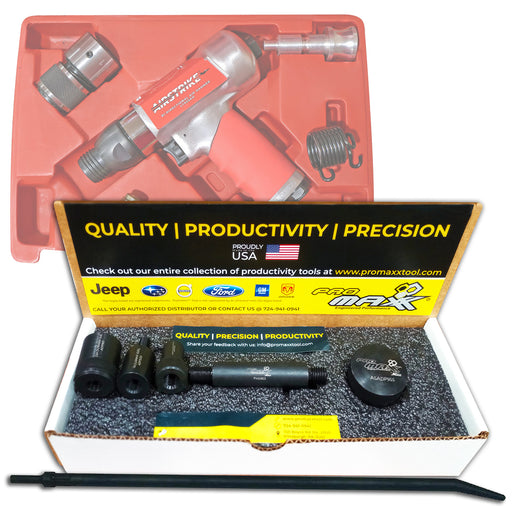
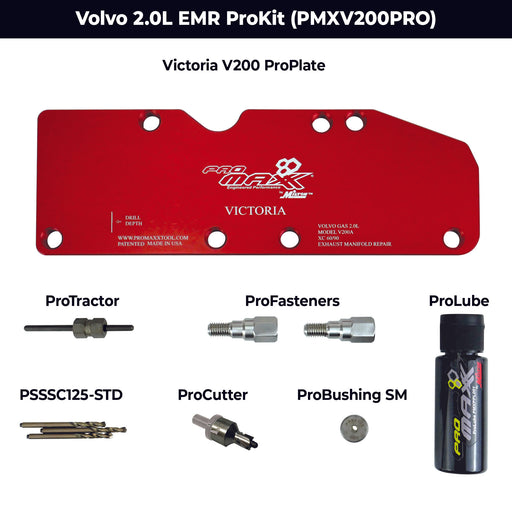
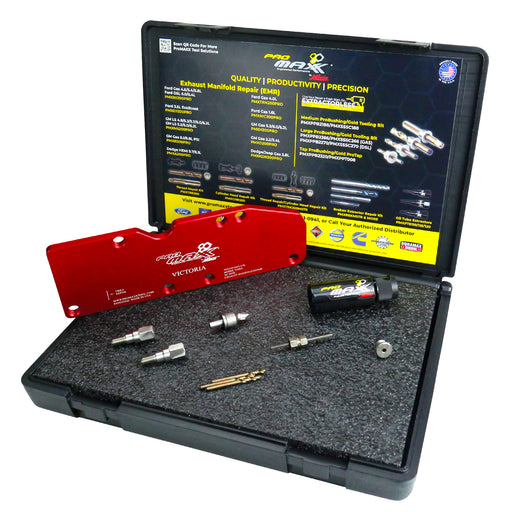


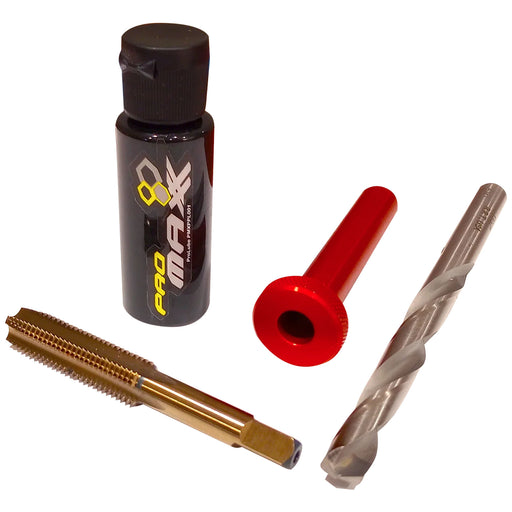
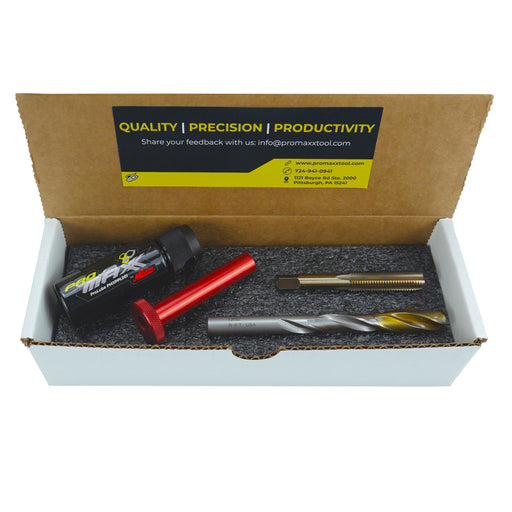
Ford 3.5 Ecoboost Harmonic Balancer Bolt Puller Kit: PMXCSR035KIT - ECO• Compatible with Ford 3.5L Bolt Part: HL3Z-6A340-A & F5RZ-6A340-B• May ...
VIEW MORE
For Saturday delivery or special shipping instructions, please contact ProMAXX Tool M-F 8 a.m. – 5 p.m. EST at 724-941-0941. Expedited Orders Placed by 1pm EST will be Processed Same Day | UPS Ground Processing Time is 1-3 Business Days

Offering a range of policies

Contact our support team today
724-941-0941

1121 Boyce Road
Suite #2000
Pittsburgh, PA 15241
Any motor company logo on this site is a Registered Trademark. ProMAXX Tool is not affiliated with any of the motor companies on this site.
Leave a comment