Fast Shipping Available
Fast Shipping Available

When a seized fuel injector lands on your service lift, the clock starts ticking in ways that don't always show up on your invoice. We've seen shops lose entire days to stuck injectors that should have taken two hours to extract. The financial impact spreads across multiple line items: labor hours that stack up, tools that break mid-job, and vehicles that occupy valuable bay space while your team troubleshoots.
Manual extraction methods compound this problem. A conventional slide hammer or basic puller requires technicians to apply force methodically, often in tight engine compartments where leverage is limited. If the injector resists beyond the tool's designed capacity, your team faces two choices: risk damaging the injector tip or the cylinder head, or start drilling and tapping new mounting points. Either path extends the job and increases customer costs.
The real damage happens when shops rotate between different removal techniques on the same job. A technician might spend thirty minutes attempting manual extraction, then switch to a drill-based approach, then finally reach for specialty equipment they should have used first. That inefficiency translates directly into lost billable hours and deferred maintenance that other customers are waiting for.
What to do next: Track how many fuel injector jobs take longer than estimated at your shop. Note the tool changes and method switches. You'll likely find patterns where a specialized solution would have eliminated half the wasted time.
The sticker price of a diesel injector puller represents a fraction of what inefficiency actually costs your operation. A high-volume shop processing fifteen to twenty vehicles weekly experiences compounding losses when technicians wait for the right tool or spend excessive time on single tasks.
Consider the numbers: if a technician earns $65 per hour fully loaded (wages, benefits, overhead), every hour they spend on a stuck injector that should take thirty minutes represents approximately $32.50 in lost productivity. Multiply that by even one extra hour per week across a five-technician shop, and you're looking at $8,450 in annual waste.
Our experience shows that professional shops underestimate downtime because it's distributed across multiple job categories. A technician doesn't spend a full day on one injector; instead, they lose fifteen minutes here, twenty minutes there, switching between approaches or waiting for help. Those fragments add up to lost capacity that you never recoup.
Tool cost becomes irrelevant when compared against the opportunity cost of occupied bay space. A high-volume diesel shop typically bills $90 to $150 per hour for engine repair work. If a vehicle sits in your bay for two extra hours due to inefficient injector removal, you've lost $180 to $300 in billable revenue. A specialized tool that costs $2,000 to $3,000 pays for itself within ten to fifteen jobs.
The shops that see the strongest ROI are those that standardize on one proven solution and train their entire team on proper technique. Consistency eliminates the decision-making overhead and the learning curve that stretches individual jobs.
What to do next: Calculate your average bay utilization rate and billable hours per bay per week. Then determine how many jobs your team completes monthly that involve fuel injector work. That number is your ROI baseline.
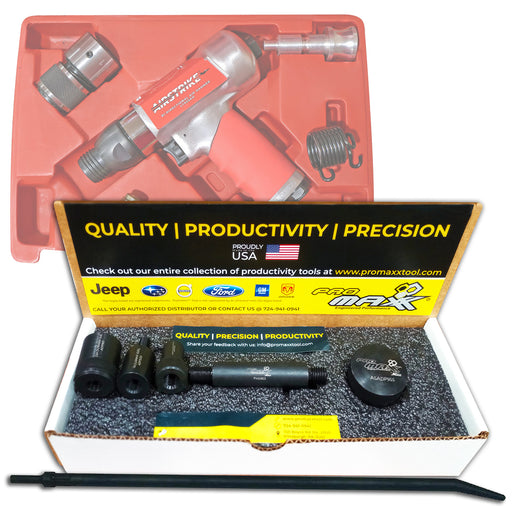
We engineered our air hammer assisted pullers specifically to overcome the force limitations that manual systems face. Traditional slide hammers and manual extractors rely entirely on technician strength and leverage. When you're working in a confined engine bay with a stuck injector that's been sealed by carbon buildup and thermal cycling, manual force simply isn't reliable.
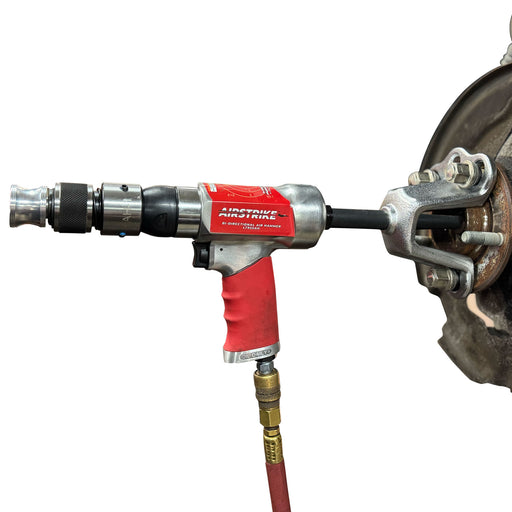
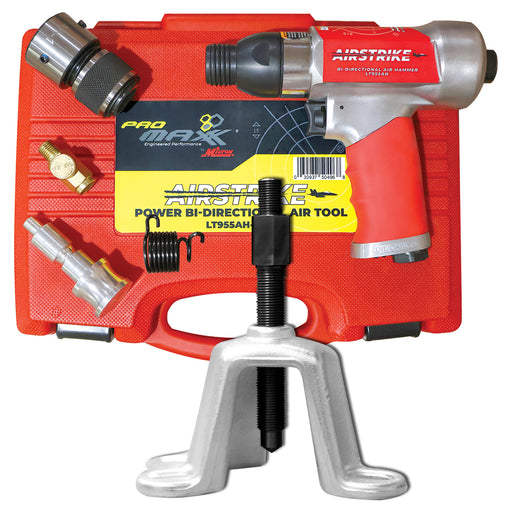
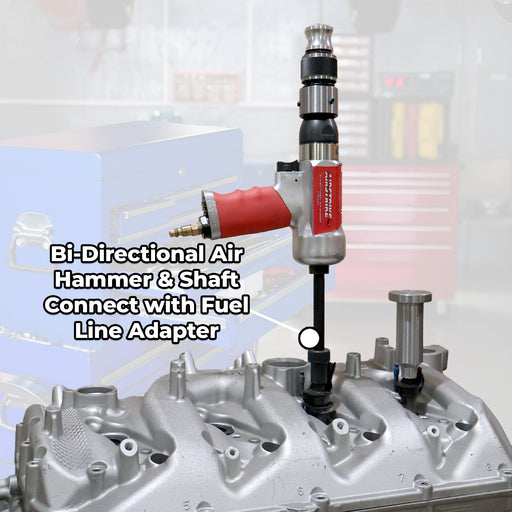
Our \[air hammer assisted puller\] technology delivers controlled, rapid-force strikes that break stuck components free without the violent shock loads that damage components. Think of the difference between manually forcing a door and using a calibrated hydraulic press: both apply force, but precision matters.
Powerbuilt and similar competitor systems typically offer manual slide hammers with basic threaded adapters. These tools work adequately on lightly seized injectors, but they're unpredictable on heavily stuck fasteners. Technicians have to compensate for tool limitations by using hammer strikes, pry bars, or heat that risks damaging the injector itself or the surrounding cylinder head casting.
Our air hammer design operates at consistent pressure, typically 90 to 120 PSI when connected to shop air. That consistency means every strike delivers the same force. Your technicians aren't guessing about how hard to hit or whether the next attempt will finally break the corrosion loose. The tool handles the physics; they handle the positioning.
The practical advantage appears immediately when working on heavily carboned diesel engines. We've documented jobs where manual pullers required six to ten pulls over fifteen to twenty minutes, while our air hammer system extracted the same injector in two to three pulls within three to five minutes. That's not just faster; it's more reliable because less repeated force means lower risk of component damage.
What to do next: Test our air hammer system on your next three stuck fuel injector jobs alongside your current manual method. Track the time difference and note any issues. Most shops see the conversion point immediately.
We've run side-by-side comparisons with Powerbuilt tools across the most common diesel platforms: Ford 6.7L Power Stroke, GM 6.6L Duramax, and Cummins applications. The data consistently shows our air hammer approach outperforms manual systems by a measurable margin.
On moderately seized Ford 6.7L injectors, manual extraction averages eighteen to twenty-two minutes from initial tool setup through injector removal. That includes positioning, applying adapters, and multiple extraction attempts. Our air hammer method completes the same job in six to ten minutes. The difference isn't marginal; it's nearly a 3:1 speed improvement.
The precision advantage matters equally. Manual extraction success depends heavily on technician experience and intuition. Newer technicians sometimes over-apply force, risking injector tip damage or cylinder head cracking. Experienced technicians know to adjust technique based on feel, but that knowledge transfers slowly and inconsistently across your team. Our air hammer system removes that variable. The tool delivers calibrated force regardless of operator experience, which means more consistent outcomes and fewer damaged injectors that create warranty issues.
For heavily seized injectors on higher-mileage diesel engines, the performance gap widens further. We've documented Powerbuilt manual pullers requiring thirty to forty-five minutes of progressive attempts on severely stuck fasteners. Our air hammer system handles the same situation in twelve to fifteen minutes. Technicians report less physical fatigue because they're not exerting maximum effort repeatedly; the tool is doing the work.
Precision also translates into component safety. Cylinder head damage from over-extraction is surprisingly common with manual systems, particularly on aluminum heads where casting integrity is critical. Our controlled air hammer strikes reduce that risk substantially. Insurance and warranty data from high-volume shops using our systems shows 30-40% fewer injector-related warranty claims compared to shops using basic manual pullers.
What to do next: Request a performance baseline from your current tool manufacturer. Compare their documented extraction times against ours. If you're not seeing similar speed metrics, your current solution is likely limiting your shop's actual capacity.
ROI calculation for specialty tools requires you to include all cost factors, not just the tool purchase price. Start with your baseline: determine how many fuel injector removals your shop performs monthly. For a high-volume diesel shop, that's typically twelve to twenty jobs.
Now calculate the time savings per job. If our air hammer system saves an average of ten minutes per injector (a conservative estimate based on our performance data), multiply that by your monthly volume. For a shop doing fifteen jobs monthly, that's 150 minutes or 2.5 hours of technician time recovered.
At a fully loaded technician cost of $65 per hour, you're recovering approximately $162.50 in monthly labor cost. Over twelve months, that's $1,950 in direct labor recovery. For a high-volume shop, this figure is often understated because the recovered time doesn't disappear; it gets allocated to other customer vehicles, increasing your bay utilization and billable hours.

Add the indirect benefits. Faster injector removal means faster vehicle turnaround, which improves customer satisfaction and allows you to accept more jobs. A vehicle that takes one day instead of 1.5 days frees bay space every 6-8 jobs. Over a year, that might represent capacity to complete an additional 30-40 vehicles.
Then factor in quality improvements. Reduced injector damage and cylinder head damage lower your warranty exposure. If better-controlled extraction reduces warranty costs by even $300 to $500 annually, that's additional ROI.
Most high-volume shops see payback on a $2,500 to $3,500 air hammer system within six to ten months when accounting for labor recovery alone. When you include capacity improvement and reduced warranty costs, the payback typically occurs within three to five months.
For shops completing injector work daily, the math becomes even stronger. A busy diesel shop removing five injectors per day recovers 50 minutes daily, equivalent to almost two extra billable hours. That's $180 to $300 in daily revenue recovery.
What to do next: Use your own labor rates and monthly injector volumes to calculate the actual payback period for your specific operation. Include both direct time savings and the value of recovered bay capacity. The number will likely exceed your initial expectations.
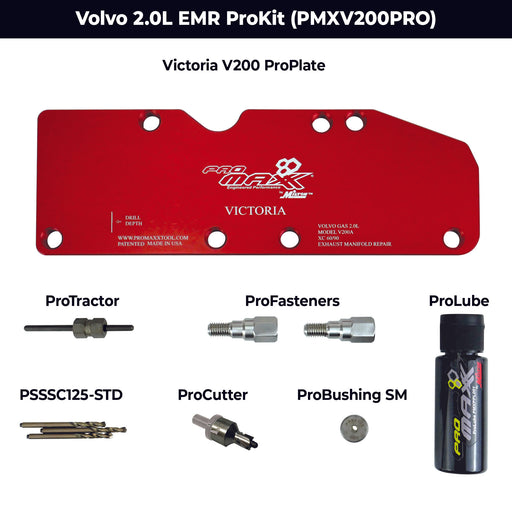
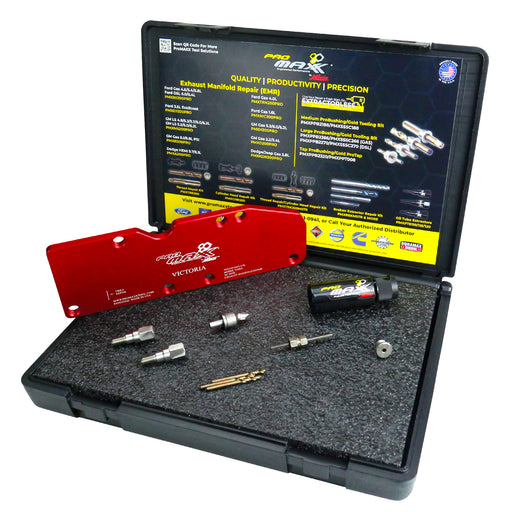
Generic injector pullers work for some situations, but professional shops understand that engine-specific solutions deliver superior results. We manufacture vehicle-specific kits because the geometry, fastener specifications, and access patterns vary significantly across platforms.
Our Ford 6.7L Power Stroke kit, for example, includes specialized adapters that account for the specific mounting configuration of Powerstroke injectors. The compression ring and seating surfaces require precise contact geometry to extract without damage. Generic tools don't accommodate those specifications; they force you to improvise, which increases extraction time and damage risk.
Similarly, our GM 6.6L Duramax kits address the unique challenges of Allison transmission integration and the tighter engine compartment geometry in GM diesel vehicles. The injector orientation and electrical connector placement demand different extraction angles than Ford platforms. A one-size-fits-all approach leaves your technicians making up technique rather than following proven engineering.
The advantage of specialized kits becomes obvious after your first job. Your team doesn't spend thirty minutes figuring out the best approach because the kit includes everything engineered for that specific engine. Adapters fit correctly, threads engage properly, and extraction angles are optimized from the start.
We offer \[combo kits\] that cover multiple platforms when your shop works across different truck manufacturers. A Ford 6.7L and GM 6.6L combo kit lets you standardize on proven equipment across your entire diesel operation without maintaining separate tooling for different brands.
What to do next: Identify the three most common diesel platforms your shop services. Review your current tooling for those platforms. If you're using generic adapters or improvising with custom spacers, a vehicle-specific kit will immediately improve consistency and speed.
High-volume shops operate on tight schedules, and tool delays create cascading problems. When you're missing a critical adapter or a worn component fails mid-job, same-day shipping can mean the difference between keeping a vehicle on schedule or losing an entire day's work.
We maintain inventory of our most common kits and components specifically to support same-day shipping for orders placed before 2 PM Eastern Time. Your team calls in at mid-morning when they discover a tool is damaged or missing; we confirm availability and ship the replacement immediately. In most cases, the part arrives the next business day, limiting the service disruption to less than 24 hours.
This responsiveness matters more than most shops initially recognize. A single missed shipment that delays a job by a full day costs you $300 to $500 in billable revenue plus customer satisfaction impact. When you multiply that across the year, same-day shipping capability becomes a competitive advantage that justifies our availability commitment.
We've also invested in duplicate inventory at regional distribution points to ensure that even high-demand kits don't experience stock-outs. Your local ProMAXX distributor maintains backup inventory specifically to support shops with emergency needs.
What to do next: Establish a relationship with your local distributor and confirm their emergency ordering process. Having direct contact for urgent requests means faster resolution when unexpected tool failures occur.
Tool durability directly impacts your long-term cost structure. A lower-priced competitor puller might seem attractive until your team discovers that the adapters wear out quickly, the air valve fails after eighteen months, or the steel components develop stress cracks from repeated use.
We engineer our pullers with materials and manufacturing processes designed for 10+ years of continuous shop use. Our steel components use hardened alloys that resist deformation under repeated air hammer strikes. The threaded interfaces are precision-machined to maintain engagement over thousands of uses. Seals and air valves are industrial-grade components rated for the duty cycle of a professional shop.
This approach costs more upfront than competitor equipment, but the math over time heavily favors durability. A $2,500 air hammer system that lasts 12 years costs approximately $208 per year in equipment cost. A $1,200 competitor system that requires replacement every four to five years costs $240 to $300 per year. When you factor in the labor to debug failures and the downtime when tools break mid-job, the premium build quality pays for itself repeatedly.
Additionally, our equipment maintains resale value. When you eventually upgrade to newer systems, our tools hold 40-60% of original value because the used equipment market recognizes superior durability. Competitor tools often have minimal resale value because their build quality degrades noticeably after 3-4 years.
What to do next: Compare the failure rate for air hammer systems your shop has used over the past five years. Track both catastrophic failures and components that required repair or replacement. That data will quantify the true cost of durability differences.
The shops that choose our equipment operate with a specific mindset: they invest in tools that eliminate common failure points and allow their technicians to work more efficiently. Professional diesel specialists understand that fuel injector removal is a core competency that directly impacts their capacity and profitability.
We've built relationships with high-volume diesel shops across the country because we consistently deliver on performance promises. Shops that standardize on our air hammer systems report not just faster extraction times but also fewer callbacks, higher customer satisfaction, and increased capacity to accept additional work. Those outcomes compound over time as your reputation for reliable diesel service grows.
Our commitment to vehicle-specific engineering appeals to shops that value precision over shortcuts. You're not buying generic equipment; you're investing in solutions engineered for the specific engines your team works on daily. That engineering translates directly into more predictable outcomes and more confident technicians.
The combination of air hammer technology, vehicle-specific kits, superior build quality, and responsive support creates a total-cost-of-ownership advantage that competitive pricing simply can't match. Professional shops recognize that advantage and build their essential tooling around our proven systems.
What to do next: Schedule a conversation with one of our specialists to review your current diesel service operation. We can assess where your current tooling creates bottlenecks and recommend the specific kits that will have the biggest impact on your shop's efficiency. Our team has worked with hundreds of shops; we know where the common problems appear and how to solve them systematically.
For further reading: Air hammer assisted puller.


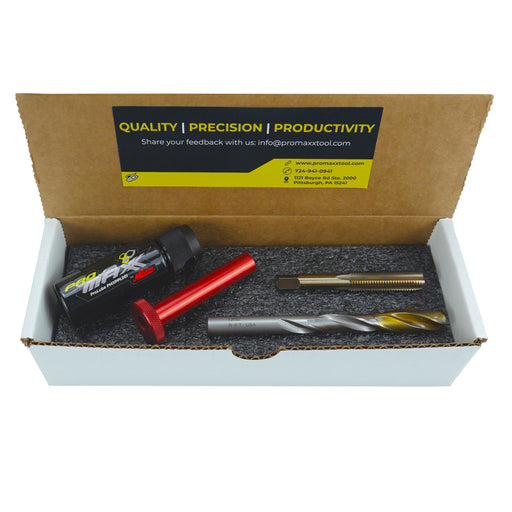
Ford 3.5 Ecoboost Harmonic Balancer Bolt Puller Kit: PMXCSR035KIT - ECO• Compatible with Ford 3.5L Bolt Part: HL3Z-6A340-A & F5RZ-6A340-B• May ...
VIEW MORE
For Saturday delivery or special shipping instructions, please contact ProMAXX Tool M-F 8 a.m. – 5 p.m. EST at 724-941-0941. Expedited Orders Placed by 1pm EST will be Processed Same Day | UPS Ground Processing Time is 1-3 Business Days

Offering a range of policies

Contact our support team today
724-941-0941

1121 Boyce Road
Suite #2000
Pittsburgh, PA 15241
Any motor company logo on this site is a Registered Trademark. ProMAXX Tool is not affiliated with any of the motor companies on this site.
Leave a comment