Fast Shipping Available
Fast Shipping Available

Diesel fuel injectors seize for a straightforward reason: exposure to extreme heat, carbon buildup, and fuel contamination over thousands of operating hours. When a technician encounters a stuck injector during engine diagnostics or repair, the clock starts ticking. A seized injector can waste hours of labor if removal is attempted with inadequate tools, potentially damaging the injector itself or the cylinder head.
The stakes are high. Improper extraction techniques risk costly collateral damage to the engine block, forcing a complete injector replacement plus additional machine work. Meanwhile, your shop loses billable hours waiting for a solution. Professional diesel technicians know that the right extraction tool isn't a luxury; it's a necessity that separates efficient shops from those that struggle with repeat callbacks and frustrated customers.
The core challenge: seized injectors require consistent, controlled pulling force that overcomes corrosion and carbon bonding without shocking the injector tip or the surrounding casting. This is where extraction method choice matters tremendously. Your decision between air-hammer and hydraulic systems directly impacts job speed, tool longevity, and your bottom line.
Air-hammer technology applies rapid, repetitive impact force that breaks the corrosion bond holding the injector in place. Unlike steady hydraulic pressure, which applies continuous force in one direction, air-hammer systems deliver thousands of micro-impacts per minute. This creates a "hammering and pulling" action that loosens seized components from multiple angles simultaneously.
The mechanical advantage is substantial. Hydraulic systems rely on building pressure over time and maintaining it steadily. If resistance is too high, the technician must increase pressure further, risking equipment failure or part damage. Air-hammer pullers, by contrast, can operate at lower overall forces because the impact frequency does the heavy work. The component gradually loosens with each strike, reducing shock load on the injector.
Speed is another decisive factor. Hydraulic pullers require setup time to pressurize, careful monitoring of pressure gauges, and slower operation to prevent catastrophic failure. Air-hammer systems connect to existing shop compressors and begin working immediately. A seized injector that might require 15-20 minutes of hydraulic pressure work can often come free in 3-5 minutes with air-hammer assistance.
Reliability also favors air-hammer design. Hydraulic systems contain seals and pressure-sensitive components that degrade with use. Leaks develop. Pressure inconsistency follows. Air-hammer pullers are mechanically simpler, with fewer moving parts prone to failure. Your maintenance costs and downtime decrease over the life of the tool.
We design our air-hammer fuel injector pullers around the specific geometry and resistance profiles of common diesel engines. Our team tested extraction forces on actual seized injectors from Ford Power Stroke, GM Duramax, and Cummins platforms to understand exactly how much impact energy is needed to break corrosion bonds without damaging precision components.
The result is a tool that combines controlled impact frequency with graduated pulling force. Our air-hammer mechanism operates at a frequency optimized for fuel injector removal, not generic automotive work. We engineered quick-change adapters for vehicle-specific mounting, reducing setup time and minimizing the risk of cross-threading adapters during high-stress extraction.
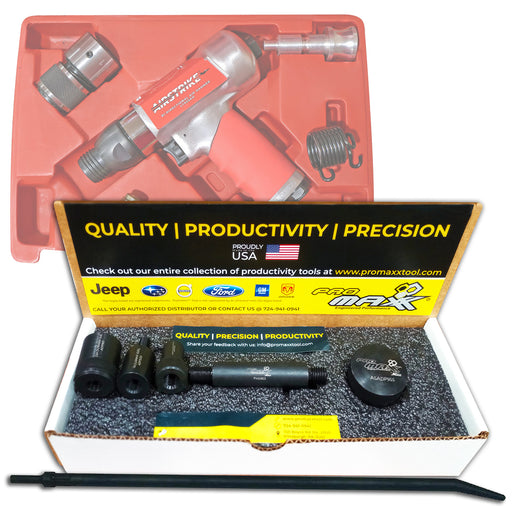
Our Power Stroke air-hammer puller for Ford 6.7L engines, for example, delivers extraction speeds approximately 2X faster than hydraulic alternatives while maintaining precision control. The tool features both air-hammer and manual slide-hammer options, giving your technician flexibility for varying resistance levels.
We also offer the air-hammer injector puller combo kit for shops working across multiple platforms. This system covers both Ford Power Stroke and GM Duramax applications with a single equipment investment, reducing your total tool acquisition cost while simplifying inventory management.
Hydraulic injector pullers have legitimate applications in specialized scenarios. When a technician faces extreme resistance or a partially broken injector tip, hydraulic systems allow fine-pressure control that prevents secondary damage. The steady, continuous pull can sometimes succeed where impact-based methods might cause snapoff of a weakened component.
However, these advantages come with significant operational drawbacks. Hydraulic systems require specialized training for proper pressure adjustment and safety protocols. Many shops maintain separate staff expertise just for hydraulic tool operation. If a technician misjudges resistance and applies excessive pressure, injector damage becomes likely. The cost of replacing a damaged injector (often $400-$800 per unit on diesel engines) quickly negates any labor savings from a faster extraction attempt.
Setup complexity creates another limitation. Hydraulic pullers need mounting fixtures specifically engineered for each engine platform. Adapters must be precise and securely fastened before pressurization begins. Mistakes in adapter installation can result in slippage, wasted labor, and potential equipment damage. Many diesel shops report spending 30-45 minutes on setup alone for hydraulic injector work.
Maintenance burden is real and ongoing. Hydraulic seals degrade from temperature cycling and contamination. Pressure gauges lose calibration. Fluid disposal requires environmental compliance procedures. Annual certification of hydraulic systems is often required in professional settings. These costs accumulate, and unplanned downtime from seal failure disrupts your shop's schedule at the worst possible moments.
The numbers tell a clear story. In controlled extraction scenarios, air-hammer pullers consistently remove seized injectors 40-65% faster than hydraulic systems. This speed difference compounds across a typical diesel shop's workload.
Consider a shop that performs 8-12 injector extractions per week. If each air-hammer extraction saves 10-12 minutes compared to hydraulic setup, pressurization, and careful pressure monitoring, that's 80-150 minutes of billable labor recovered per week. Over a year, that represents 70-130 additional labor hours available for income-generating work. For a shop billing $150 per labor hour, the efficiency gain alone can justify tool investment in the first few months.
Air-hammer efficiency improves further when dealing with multiple seized injectors on the same engine. Since there's minimal setup time between extractions, a cylinder head with three stuck injectors moves through removal in continuous workflow. Hydraulic systems require depressurization, adapter reconfiguration, and repressurization for each injector, fragmenting the process into discrete steps.
Technician fatigue also matters. Hydraulic work requires sustained attention to pressure gauges and careful hand movements during pressurization. Air-hammer extraction is more straightforward: connect, activate, monitor progress. Experienced diesel technicians report less hand fatigue and fewer concentration lapses with air-hammer systems, reducing the risk of operator errors that damage components.
Initial tool acquisition cost favors air-hammer systems. A quality air-hammer fuel injector puller kit costs $800-$1,400 depending on engine platform coverage. Hydraulic systems typically range from $1,200-$2,500 for comparable platform coverage. The lower upfront investment with air-hammer tools reduces capital expenditure barriers, especially for shops adding diesel repair capabilities.
Operating costs diverge significantly. Air-hammer systems consume compressed air already available in most shops. Hydraulic systems require dedicated fluid, which costs $50-$100 per gallon and needs periodic replacement for contamination management. A single hydraulic injector job that requires pressure cycling through a full cycle uses roughly 2-3 gallons of fluid over time, costing $100-$300 in fluid alone.

Labor efficiency translates directly to revenue. If an air-hammer system extracts an injector 12 minutes faster than a hydraulic alternative, and your labor rate is $150/hour, that job yields an additional $30 in billable labor. Across 100 injector extractions annually (realistic for a diesel-focused shop), that's $3,000 in recovered revenue with zero additional parts or materials cost.
Reliability reduces unplanned maintenance expenses. Air-hammer systems have minimal components requiring replacement. Hydraulic systems demand annual seal kits ($200-$400), periodic pump servicing ($300-$600), and potential hose replacement after pressure incidents. Over five years of operation, hydraulic system maintenance costs typically exceed $2,000, while air-hammer maintenance stays under $400.
Resale value consideration: when upgrading tool inventory, air-hammer systems retain 50-60% of initial value in the secondary market. Hydraulic systems depreciate faster because fewer shops want to inherit potential seal or pump issues. If you eventually transition to newer equipment, air-hammer tools are easier to sell or trade.
Ford Power Stroke diesel engines (6.0L, 6.4L, 6.7L platforms) present unique injector extraction challenges because of deep cylinder head geometry and tight injector spacing. We engineered our Power Stroke pullers with extended reach adapters and angled mounting brackets that work within the confined engine bay space on Super Duty trucks. The air-hammer mechanism operates at frequencies specifically optimized for Power Stroke injector resistance profiles, reducing extraction time compared to generic pullers.
GM Duramax engines (LB7, LLY, LMM, LML generations) require different approach angles and mounting precision because of cylinder head casting variations across production years. Our Duramax-specific tools account for these dimensional differences, ensuring solid engagement without adapter rocking or slippage during extraction.
Cummins diesel platforms (5.9L, 6.7L, current generation) use injectors with different seating geometry than Ford or GM systems. The corrosion patterns and bonding forces differ because of Cummins fuel system architecture. Our tools include Cummins-specific adapters and impact frequency adjustments that recognize these platform-specific differences.
A critical advantage: vehicle-specific design prevents adapter misalignment that causes technician frustration and potential injector damage. Generic pullers sold at tool discount retailers often use one-size-fits-all adapters that rock or slip under pressure. We engineer each tool for exact platform fit, ensuring every extraction starts with solid mechanical advantage rather than playing catchup against poor adapter seating.
We've worked extensively with diesel shops across the country to understand what drives purchasing decisions and tool loyalty. The consistent theme: technicians want tools that work the first time without surprises or damaged components.
A transmission specialist in Texas reported extracting a severely seized fuel injector from a 6.7L Power Stroke in under 4 minutes using our air-hammer puller, compared to a previous experience with a hydraulic system that required 45 minutes and still resulted in minor tip damage. The speed and safety difference convinced the shop to standardize on air-hammer equipment across their diesel injector work.
Another shop, specializing in Duramax engine rebuilds, documented a 35% reduction in total injector extraction time after transitioning from hydraulic to air-hammer tools. Because extraction was faster and more reliable, technicians could perform more complete diagnostic work on fuel systems within the same appointment window, increasing average job revenue without adding labor hours.
Field feedback consistently highlights the reliability advantage. Diesel technicians appreciate tools that don't have maintenance surprises between jobs. A hydraulic system leaking seals mid-extraction creates frustration and potentially unsafe conditions. Air-hammer systems remain predictable across hundreds of extraction cycles, building confidence in repeatability.
Safety is often an overlooked factor. Hydraulic systems under high pressure create potential hazards if seals fail suddenly. Pressurized fluid injection injuries are rare but serious. Air-hammer systems operate at lower overall pressures with impact distribution, reducing catastrophic failure risk. Insurance carriers and OSHA compliance officers increasingly recognize air-hammer tools as the safer platform choice.
Start by assessing your platform coverage. If your diesel work is concentrated on Ford Power Stroke engines, a Power Stroke-specific air-hammer puller provides precision engineering at lower cost than a multi-platform combo kit. If your shop services mixed diesel platforms (Ford, GM, Cummins), investing in a combo kit or multiple platform-specific tools reduces extracting failures from adapter mismatches.
Evaluate your compressed air capacity. Air-hammer tools typically require 80-90 PSI at 4-6 CFM sustained flow. Most shop compressors (5-10 horsepower rotary screw systems) deliver adequate volume. If your shop operates marginal compressor capacity, verify the puller's air requirements match your system before purchasing.
Consider extraction frequency. A shop performing occasional diesel work (2-3 injector extractions monthly) can justify smaller investment with single-platform tools. A high-volume diesel shop (8-15 weekly extractions) benefits from multi-platform combo kits that eliminate adapter switching and inventory complexity. Calculate your annual extraction volume; if it exceeds 30 injectors, multi-platform coverage pays for itself quickly through time savings alone.
Training and support matter. Ensure your tool supplier provides clear documentation and video guidance for your specific platform. Air-hammer systems are intuitive, but understanding your particular engine's extraction geometry prevents missteps. We provide platform-specific setup videos and direct technician support to ensure you maximize tool effectiveness from day one.
Test a tool with a challenging injector before full commitment if possible. Many quality suppliers offer demo programs or satisfaction guarantees. The confidence of knowing a tool performs on your most difficult extraction scenarios eliminates buyer's remorse and ensures team buy-in.
Our position as the leading air-hammer injector puller manufacturer isn't accidental. We've invested years in understanding diesel engine architecture, injector seating variations across platforms, and the precise impact frequencies required for reliable extraction without component damage.
Our engineering advantage starts with platform specificity. We don't manufacture generic pullers that sort-of-work across multiple engine families. Each ProMAXX puller is engineered from actual seized injector data collected from real diesel shops, allowing us to optimize impact frequency, adapter geometry, and mounting precision for each platform. This specialization means your extraction succeeds reliably, not occasionally.
Quality consistency differentiates us further. Every ProMAXX air-hammer puller undergoes rigorous testing on actual seized injectors before shipping. We verify impact frequency accuracy, adapter fit tolerance, and mechanical durability across the tool's expected service life. This testing eliminates the variable quality issues that plague lower-cost competitors, ensuring your tool performs identically on extraction #1 and extraction #500.
Support and reputation matter when you're investing in specialized diesel tools. We stand behind our products with technical support available to your team and straightforward warranty coverage that reflects our confidence in durability. Thousands of diesel shops nationwide rely on ProMAXX equipment daily, and that installed base represents the most powerful endorsement possible: technicians choosing us repeatedly because our tools deliver results.
Your decision to invest in the right diesel injector puller directly impacts your shop's efficiency, profitability, and customer satisfaction. Air-hammer technology outperforms hydraulic systems consistently across speed, reliability, and total cost of ownership. Among air-hammer suppliers, ProMAXX tools provide the engineering precision and platform specialization that transforms seized injector extraction from a frustrating bottleneck into a predictable, quick operational step.
When you choose ProMAXX, you're investing in tools engineered specifically for diesel injector challenges, supported by a manufacturer that understands your work intimately. That's not just a purchasing decision; it's a strategic investment in your shop's capability and profitability.
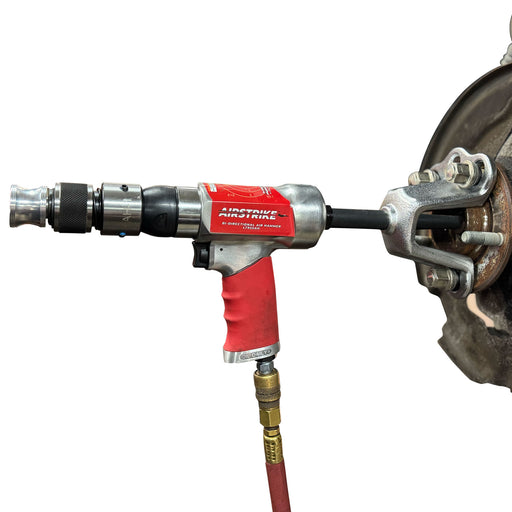
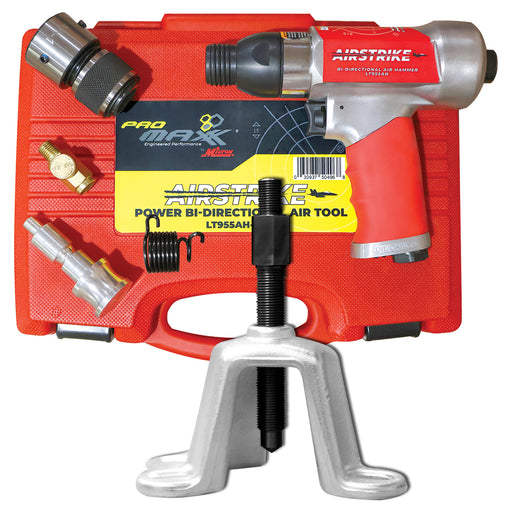
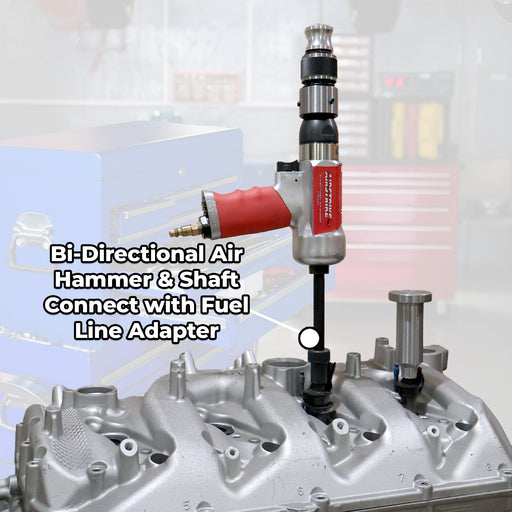


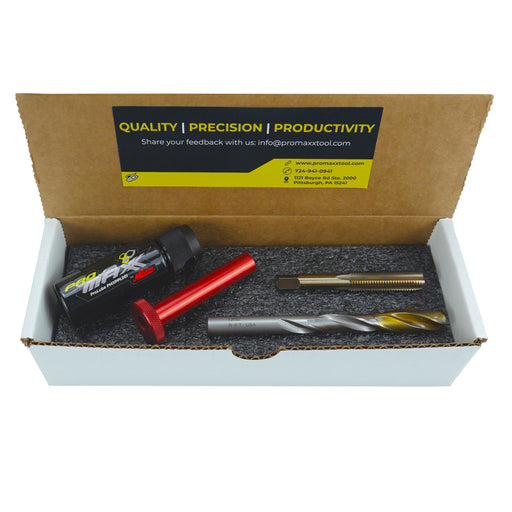
Ford 3.5 Ecoboost Harmonic Balancer Bolt Puller Kit: PMXCSR035KIT - ECO• Compatible with Ford 3.5L Bolt Part: HL3Z-6A340-A & F5RZ-6A340-B• May ...
VIEW MORE
For Saturday delivery or special shipping instructions, please contact ProMAXX Tool M-F 8 a.m. – 5 p.m. EST at 724-941-0941. Expedited Orders Placed by 1pm EST will be Processed Same Day | UPS Ground Processing Time is 1-3 Business Days

Offering a range of policies

Contact our support team today
724-941-0941

1121 Boyce Road
Suite #2000
Pittsburgh, PA 15241
Any motor company logo on this site is a Registered Trademark. ProMAXX Tool is not affiliated with any of the motor companies on this site.
Leave a comment