Fast Shipping Available
Fast Shipping Available

Ford F-Series trucks experience exhaust manifold bolt failures at higher rates than many other vehicles, and the reasons are both mechanical and environmental. The manifold bolts operate in one of the engine's hottest zones, cycling between extreme temperatures hundreds of times per day. Cast iron manifolds expand and contract differently than the steel engine block, creating stress concentrations at the bolt root.
Over time, thermal cycling loosens bolts gradually. Vibration from engine operation compounds this effect, and loose bolts begin micro-moving within their holes. This micro-motion generates corrosion between the bolt and hole, essentially welding them together through oxidation.
EcoBoost engines compound the problem further. These smaller displacement, turbocharged engines run hotter than their naturally aspirated predecessors, accelerating the corrosion process. On diesel F-Series trucks, the sustained high-temperature operation and towing loads amplify the same failure mechanism.
Technicians often inherit this problem mid-service. You'll remove the manifold gasket, attempt to unbolt the manifold, and discover that the bolt either snaps off or simply won't move despite substantial torque application.
What to do next: Document which Ford engine family dominates your service volume. The extraction approach differs based on whether you're dealing with naturally aspirated, turbocharged, or diesel applications.
A single failed extraction attempt typically costs more than the right tool investment. When a bolt snaps during removal, you're no longer dealing with a simple bolt extraction. Now you have a threaded stud stuck inside the engine block.
Here's what we commonly see:
We've heard from shops spending $800-$1,200 in labor trying to extract a single manifold bolt using conventional methods. The customer's truck sits idle, technician morale drops, and that's before you factor in the potential liability if you crack the casting during extraction.
The real financial impact hits your shop's throughput. While one technician is stuck on a seized bolt problem, three other trucks in the queue wait for service. Over a month, that cascades into lost revenue that exceeds the entire annual budget for specialty extraction tools.
What to do next: Calculate your current cost per failed extraction attempt by reviewing your labor hours on problem manifold jobs over the past quarter.
Standard bolt extraction techniques rarely succeed on Ford exhaust manifold fasteners because of how they're corroded and the access constraints around the manifold.
Penetrating oil sounds logical, but thermal cycling has created oxide layers that these liquids cannot penetrate. You can soak a manifold bolt overnight with commercial penetrants and see virtually no improvement. The corrosion isn't just surface rust; it's a chemical bond formed between the bolt and cast iron.
Impact tools like air hammers on standard sockets occasionally work, but they often jar the bolt free just enough to spin partially before jamming again. You're now dealing with a fractional turn, and that's often when the bolt head shears off.
Screw extractors fail regularly on these bolts because the bolt diameter and the corrosion pattern don't provide the grip these tools need. The extractor bites in, you apply torque, and suddenly you're spinning the extractor rather than removing the bolt.
Drilling out the bolt seems straightforward until you're inside a confined manifold casting, working with limited clearance and no room for the drill to walk. Inaccurate drilling damages the surrounding casting and creates the need for extensive repair.

What these methods share in common is that they ignore the actual problem: the corrosion preventing bolt rotation. You need a tool engineered specifically to break that corrosion bond and provide extracting force without transmitting shock that breaks the fastener.
What to do next: Stop experimenting with general-purpose extraction tools on these fasteners. Document which specific methods have failed in your shop so you recognize the pattern.
We designed our exhaust manifold extraction systems around the real-world challenges Ford technicians face. Our approach centers on three core principles: breaking the corrosion bond before applying force, providing focused extracting leverage, and protecting the fastener and surrounding casting from damage.
Our kits use a penetrating compound specifically formulated for automotive corrosion rather than general-purpose penetrating oil. The chemistry is engineered to reach the oxidation layer between cast iron and steel that standard products cannot address. We apply this compound and allow controlled dwell time rather than hoping overnight soaking will work.
The extraction methodology employs a combination of heat application and mechanical breaking techniques. Controlled localized heating expands the bolt microscopically, disrupting the corrosion bond. This isn't random heat; it's precisely applied to avoid damaging surrounding components or warping the manifold.
Once the corrosion bond breaks, our extraction tooling provides mechanical advantage without shock load. We use leverage-based systems that multiply your force application gradually rather than impact methods that snap fasteners.
Each kit includes applications-specific components for different bolt sizes and configurations across Ford's F-Series lineup. A 5.0L naturally aspirated engine has different manifold bolt specifications than a 3.5L EcoBoost or a 6.7L Power Stroke diesel. Our engineering accounts for these variations in one comprehensive system.
What to do next: Review our complete extraction engineering guide on our website to understand how each component addresses a specific failure point in traditional methods.
Our Ford exhaust manifold repair kits address the full spectrum of Ford F-Series engine configurations. We've engineered distinct kits because the bolt characteristics change with engine displacement, turbocharging, and whether you're working on a gasoline or diesel application.
For traditional naturally aspirated 5.0L and larger displacement engines, our standard manifold kit includes extraction guides, specialized penetrant, heating protocols, and multiple extraction bit sizes to match specific bolt diameters.
The EcoBoost manifold kits reflect the different corrosion patterns we see on turbocharged engines. These bolts typically corrode more aggressively because of sustained higher temperatures, so our chemistry and dwell protocols are optimized accordingly.
Diesel F-Series trucks demand a separate engineering approach entirely. The Ford EcoBoost manifold repair system scales up for larger fasteners and accounts for the extreme heat cycles in diesel engines.
Each kit also includes a detailed reference guide specific to your engine type, covering bolt torque specifications, proper heating duration, and exactly how to sequence the extraction process without risk.
What to do next: Match your most common Ford F-Series engine applications to our kit lineup and order the specific system that covers your primary service volume.
The extraction process follows a methodical sequence that breaks the corrosion bond before applying extracting force.
Step 1: Initial Assessment and Penetrant Application
Before you apply any mechanical force, inspect the bolt head condition and the surrounding casting. Apply our specialty penetrant compound around the bolt perimeter, allowing it to wick into the corrosion layer. Initial dwell time is typically 30-45 minutes for moderate corrosion, extending to 2-4 hours for severely seized fasteners.
Step 2: Controlled Heat Application
Use a heat source to warm the bolt and surrounding manifold casting gradually. This isn't a heating torch applied full intensity; it's controlled localized heat that expands the fastener microscopically while avoiding warping. Monitor temperature to stay within the manifold material limits. Heating duration typically runs 5-10 minutes depending on corrosion severity.
Step 3: Corrosion Bond Breaking
Apply a secondary penetrant application and light mechanical vibration using a pneumatic tool on low intensity. This vibration disrupts the oxide layer without delivering shock that breaks the fastener. You'll often hear a subtle cracking sound as the corrosion bond breaks; that's your indicator to proceed.
Step 4: Extraction Torque Application
Using the properly sized extraction bit, apply slow steady torque rather than quick jerking motions. The bolt should rotate fractionally at first, then move more freely as you continue. Stop if you encounter resistance that doesn't ease; reapply penetrant and repeat the vibration step.
Step 5: Final Removal
As the bolt rotates freely, gradually increase torque to spec and completely back the fastener out. Do not rush this step; steady progression prevents sudden fracture near the end of extraction.
This sequence typically takes 90 minutes from start to finish, including dwell and heating time. Compare that to the 8-12 hours shops spend with conventional methods.
What to do next: Practice this exact five-step sequence on your first job with the kit so your team understands the timing and rhythm before handling difficult extractions.
The nightmare scenario for any technician is discovering that a seized bolt has fractured, now requiring manifold removal and potential engine disassembly to extract the remaining fastener from inside the block. This transforms a 3-hour job into a multi-day undertaking.
Our extraction systems are specifically engineered to prevent this outcome. By breaking the corrosion bond before applying mechanical force, we eliminate the sudden failure that snaps fasteners. The controlled methodology ensures that when you apply extracting torque, the bolt rotates rather than fractures.
We've also built in safety protocols to recognize when a bolt is at risk of failure. If you encounter resistance that intensifies rather than eases after proper bond-breaking, the system guides you to pause and reassess rather than forcing torque that fractures the fastener.
The financial difference is substantial. Preventing one engine disassembly saves your shop $2,000-$4,000 in additional labor and potential casting repair. Over a year, shops that have standardized on our extraction approach avoid the catastrophic job that derails their schedule and customer satisfaction.
What to do next: Train your team on the safety protocols included with the kit. Make sure they understand when to pause and reassess rather than continue forcing a stuck bolt.
We engineer every component in our manifold extraction kits to professional standards because we understand that a failed tool during extraction creates collateral damage that complicates the repair.

Our extraction bits are manufactured from ultra-strength alloys that we've tested extensively on Ford fasteners under the exact conditions you'll encounter. They're hardened to resist the shear forces of extraction without chipping or breaking mid-process.
The specialized penetrant compounds are formulated specifically for automotive corrosion, not general-purpose products repackaged as specialty tools. We test our chemistry against the exact oxide layers that form between cast iron manifolds and steel bolts.
Our heat protocols are validated through testing on actual Ford engine castings to ensure they provide optimal corrosion-breaking without risking manifold warping or damage to nearby components. The dwell times and heating durations we specify reflect real-world test data, not theoretical modeling.
Each kit ships with documented compatibility specifications so you know exactly which tools apply to your specific engine application. We don't sell universal solutions; we engineer application-specific systems because the variables actually matter.
What to do next: Review the quality assurance documentation that ships with your kit to understand the testing and validation behind each component.
When a customer's F-Series truck arrives at your shop with a seized manifold and your schedule is already packed, waiting days for specialty tools creates pressure to either defer the repair or attempt it with inadequate equipment.
We offer same-day shipping on all our specialty extraction kits for orders placed before 2 PM Eastern Time. That means if you order Monday morning, the kit arrives Tuesday morning, and you're extracting that bolt before lunch.
This matters operationally because it allows you to maintain your service schedule without improvising extraction techniques. You're not forced to choose between customer wait time or a high-risk extraction attempt.
For shops that maintain our kits in inventory, same-day capability is built into your workflow. You start the extraction process immediately when a customer arrives with a seized manifold problem, and you've completed the repair while competitors are still ordering tools.
What to do next: Place your first order before 2 PM to experience next-day delivery, then decide whether keeping a kit in inventory makes sense for your shop's service volume.
We regularly hear from professional technicians across heavy-duty repair shops and Ford dealerships who've standardized our extraction systems for their manifold repairs.
One shop in the Midwest reported reducing their average exhaust manifold bolt extraction time from 8 hours to 1.5 hours after switching to our kit. That time savings translated to completing 4-5 additional manifold repairs per week, significantly improving their throughput.
A diesel specialization shop in Texas told us that they eliminated their engine disassembly incidents related to failed bolt extraction. Previously, they'd encounter one or two catastrophic failures per month where a bolt snapped and required block-level intervention. After adopting our protocols, they've gone six months without a single incident, improving both profitability and customer satisfaction.
Several Ford dealership technicians mentioned that our extraction methodology has become their standard for any exhaust manifold work, not just emergency repairs. They use our approach proactively to prevent customer comebacks related to manifold fastener problems.
A fleet maintenance manager told us that standardizing on our kits reduced their outsourcing of complex manifold extractions by 60%. Previously, difficult extractions were farmed out to specialty shops at premium rates; now their in-house technicians handle nearly everything.
The consistent theme across these conversations is that the right tool, combined with the proper extraction methodology, transforms a frustrating problem into a predictable, efficient repair.
What to do next: Connect with us to hear detailed case studies from shops similar to yours, and learn their specific results before investing in your kit.
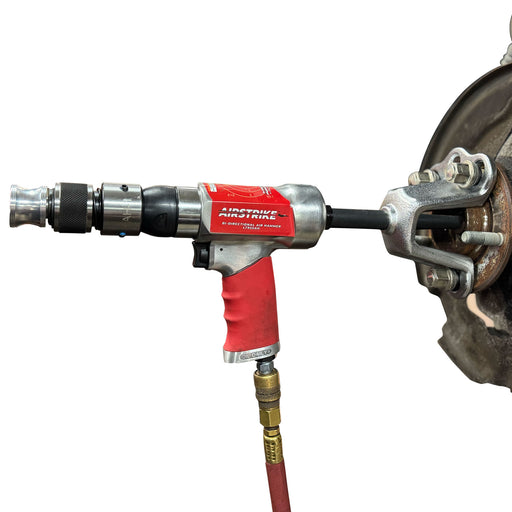
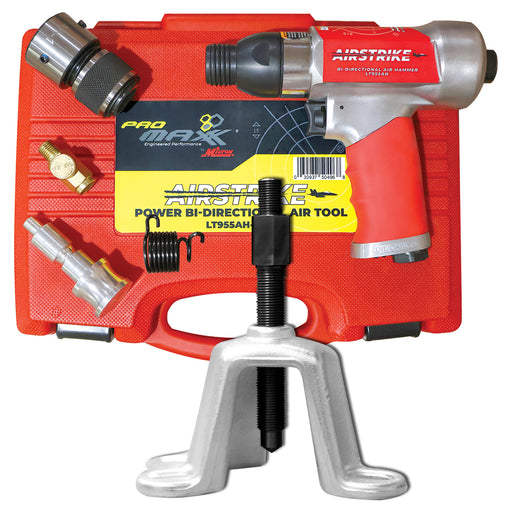
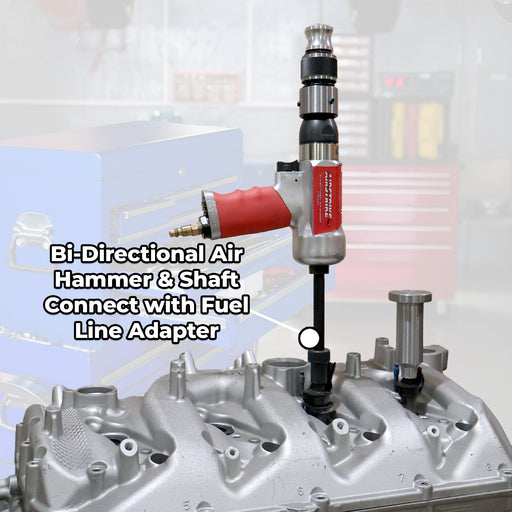
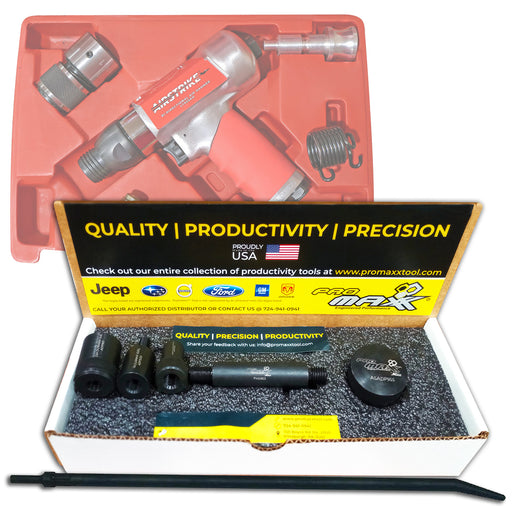
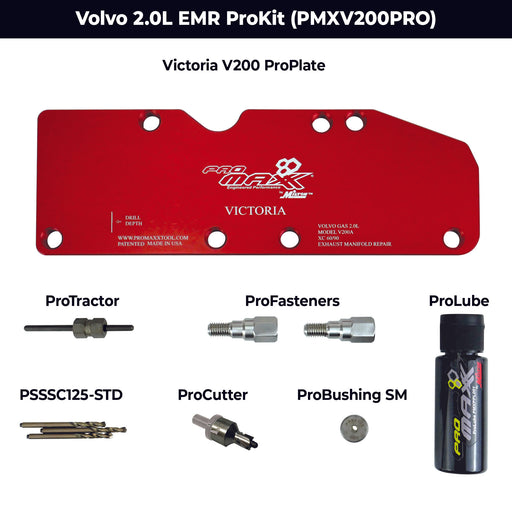
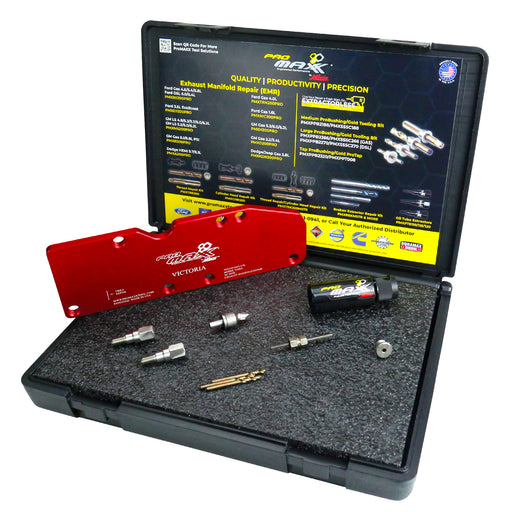


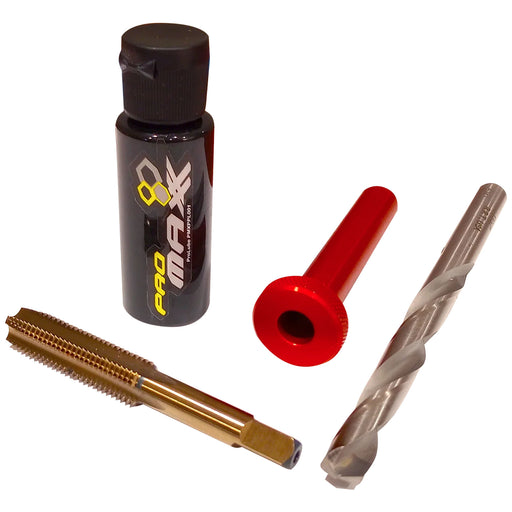
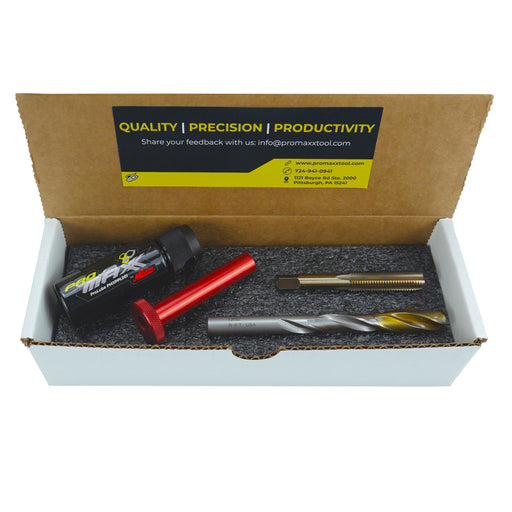
Ford 3.5 Ecoboost Harmonic Balancer Bolt Puller Kit: PMXCSR035KIT - ECO• Compatible with Ford 3.5L Bolt Part: HL3Z-6A340-A & F5RZ-6A340-B• May ...
VIEW MORE
For Saturday delivery or special shipping instructions, please contact ProMAXX Tool M-F 8 a.m. – 5 p.m. EST at 724-941-0941. Expedited Orders Placed by 1pm EST will be Processed Same Day | UPS Ground Processing Time is 1-3 Business Days

Offering a range of policies

Contact our support team today
724-941-0941

1121 Boyce Road
Suite #2000
Pittsburgh, PA 15241
Any motor company logo on this site is a Registered Trademark. ProMAXX Tool is not affiliated with any of the motor companies on this site.
Leave a comment